Great Speeches Need a Moral Core
The new year invites reflection. We reflect on our goals, our progress, and the values that guide our choices.
2025 was a strong year for me in many ways. I finished my executive MBA. I delivered a TED Talk. I watched my wife begin her career as a respiratory therapist. I traveled the world, developed businesses, and saw long-term efforts pay off.

I call that one my Ukraine outfit.
It was also a hard year. A serious family health scare nearly took someone I love. Friends and colleagues passed away. Across the world, political and social instability continues to cause unnecessary harm to people I care deeply about.
Earlier this December, I joined a week-long guided trip through Japan with a group of MBA classmates from different cohorts. We talked about our backgrounds and the work that matters to us. When I mentioned my background in speechwriting and communication, several people asked the same question: what actually makes a speech meaningful?

Me, mid-explanation (dinner on a boat in Tokyo!).
I gave the usual answers about structure and practice; you can find versions of those ideas throughout my blog. But great spekaing starts with values.
Aristotle described eudaimonia as human flourishing achieved through virtuous action guided by reason. In other words, we live well when we act in alignment with deeply held principles. Most people agree on the basics (honesty, fairness, decency). The real test comes when those values collide. If honesty conflicts with protecting a life, we instinctively know which matters more (the classic Inglorious Basterds question).
Good speechwriting is about understanding what you value, examining why you value it, and telling stories that reveal how those values guide your choices in real situations.
Three values consistently surface in my work and my life: exploration, earned excellence, and equity through education.
Exploration
Bashō
“On sweet plum blossoms
The sun rises suddenly.
Look — a mountain path!”
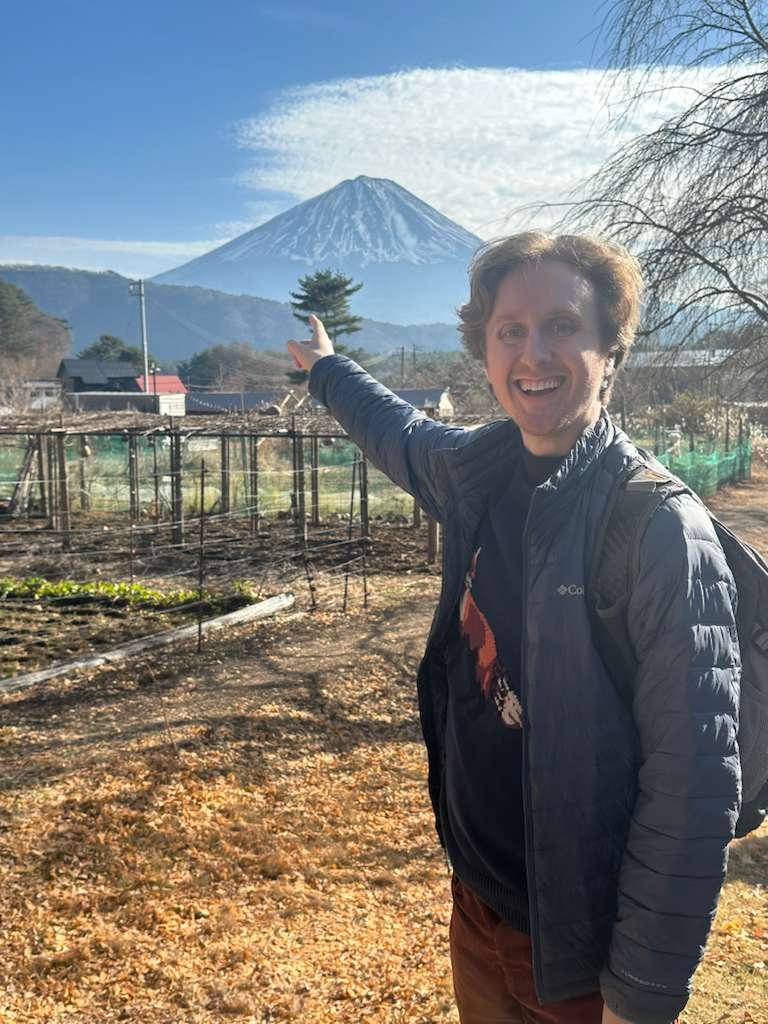
Approaching Mt. Fuji!
When I was a junior in college, I was coaching at CHAMPS Charter High School. That year, we qualified a student to the national speech and debate championship. There was only one problem: we had no funding for airfare.
The student’s parents suggested we travel cross-country anyway. I didn’t own a car, so we took a Greyhound bus from California to Alabama.
To finalize these details, I was told to meet an administrator at a school festival at Millikan Middle School in the San Fernando Valley. It should have been simple. Instead, I misheard the location over the phone and navigated by bus to Milken Community School.
I got off at a stop on Mulholland Drive.
Nothing around me looked like a school. But up the hill, I could see what looked like a basketball court. Not wanting to be late, I started climbing the hillside, cutting myself on brush and thorns as I went. When I finally reached the top, I realized I hadn’t found a campus at all. I had climbed into someone’s backyard.
Mortified, and wise enough not to slide back down a mountainside, I hopped a fence and wandered into a gated neighborhood. A kind older man saw a confused, scraped-up kid standing on the sidewalk and asked if I needed help. I explained where I was trying to go. He happened to know the event and offered to drive me there.
I’ve always explored with a kind of fearlessness that some would accurately describe as reckless. I’ve toned it down since getting married. But whether it’s wandering into unfamiliar places, taking cross-country debate trips with students, chasing down obscure restaurants, or engaging in deep psychological work to understand myself better, exploration has always been central to how I live.
I trust that something meaningful is usually waiting just past the point of certainty.
Seifu
“The faces of dolls
— In unavoidable ways
I must have grown old.”
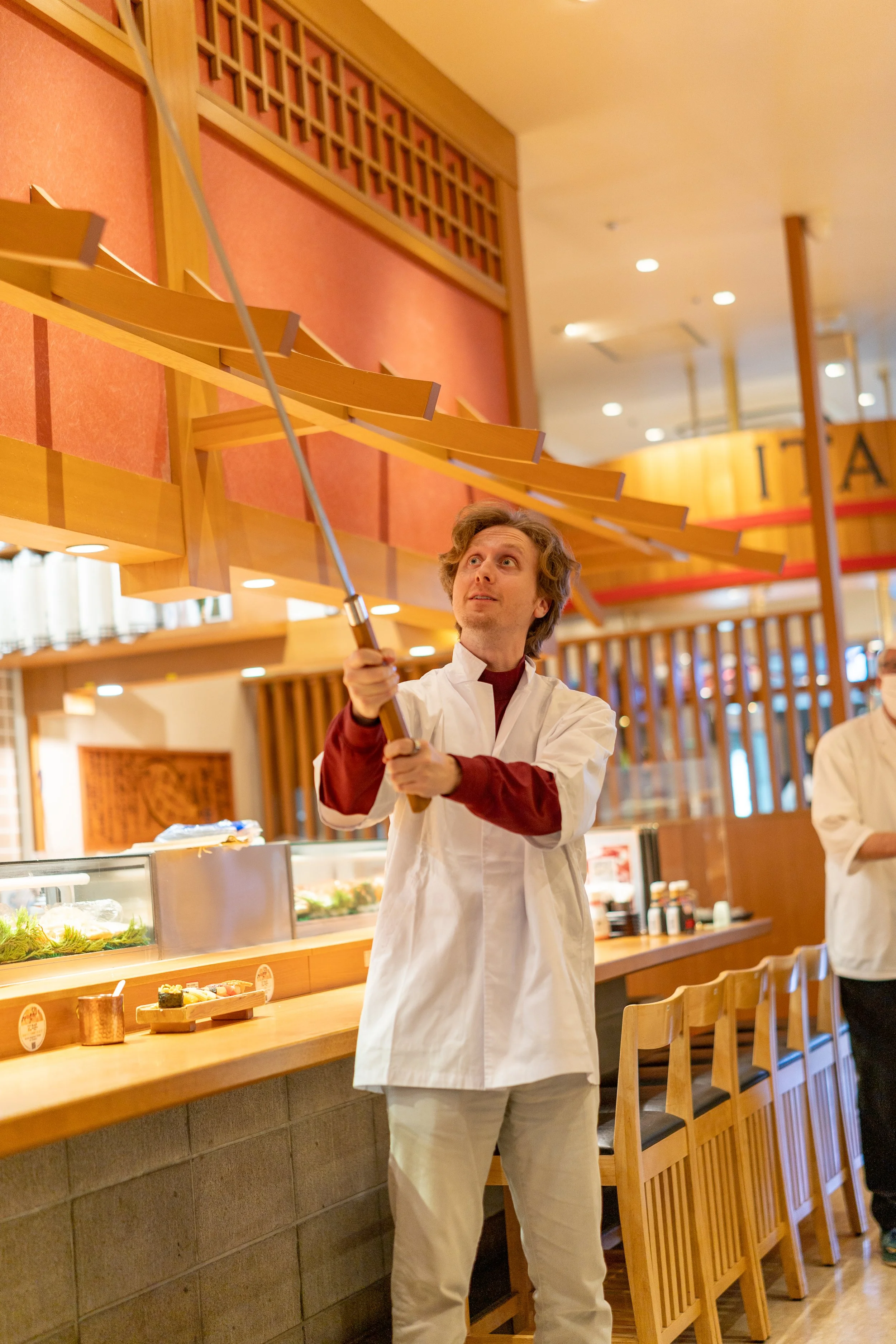
If high school Iain could see me now!
Earned Excellence
Bashō
“Hark to that cuckoo,
Ceaselessly singing in flight —
How very busy!”
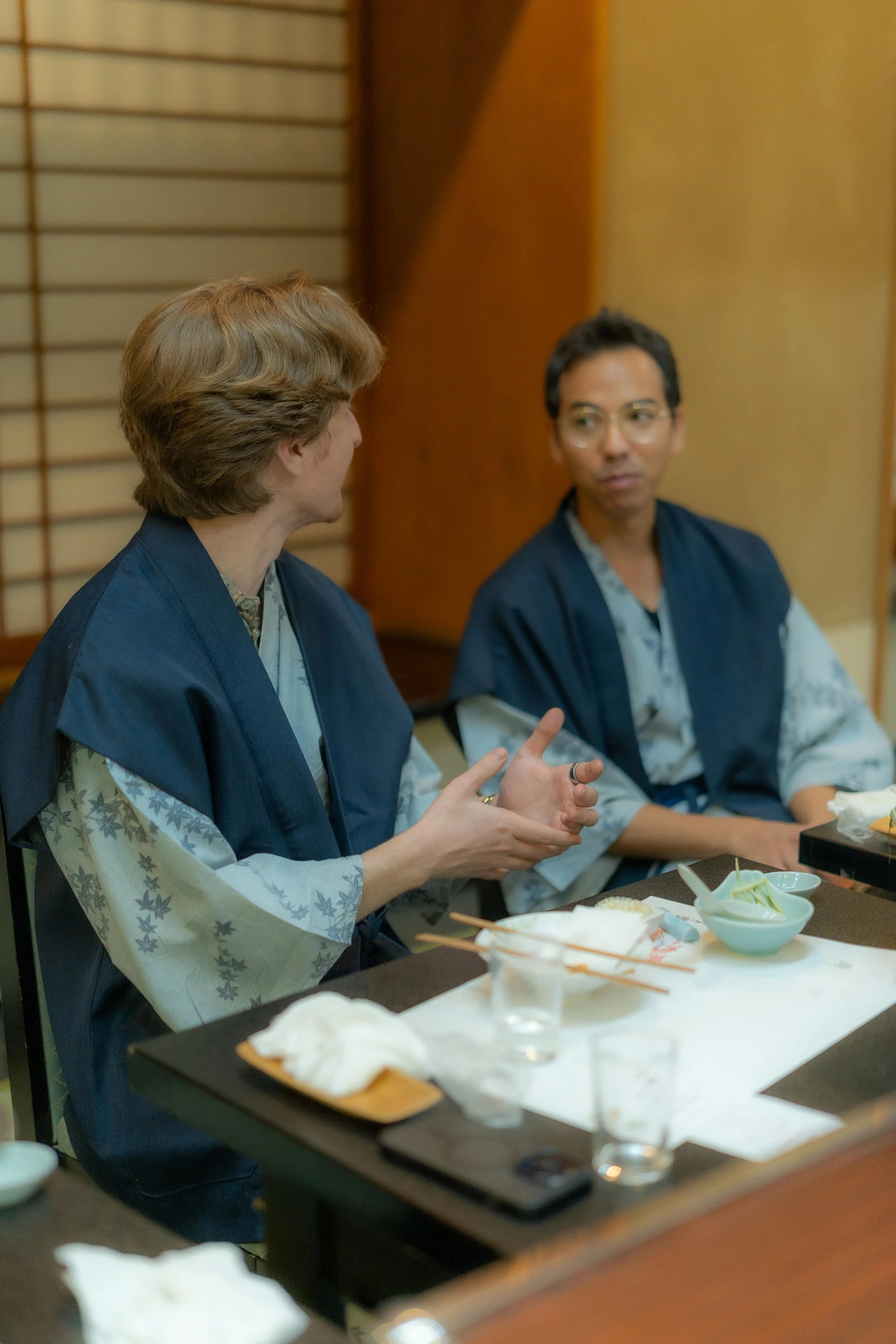
My two icebreaking questions: “What would someone say about you if they knew you for a month? What about if they knew you for two years?”
I used to memorize speech and debate statistics for fun. I could rattle off individual rankings for California state championship competitors in Impromptu Speaking from 2007 to 2014 without looking anything up.
I know that sounds obsessive, because it is. But I’ve always believed that behind every number is a story. Every ranking represents years of effort, missed sleep, failed rounds, and small decisions made consistently over time in pursuit of being better than yesterday.
People tell me I would be good at fantasy sports. I have never tried. That kind of obsession only works for me when it is attached to real people and real craft.
What I am drawn to is what the Japanese call ikigai, the pursuit of your reason for living—the successful combination of your passion, mission, vocation, and profession.
I see it in chefs who spend decades refining a single dish. In artists like Eiichiro Oda or Bill Watterson. In coaches like John Wooden. In leaders like Lee Kuan Yew.
I do not choose fields where greatness is measured by fame or money. I am not trying to out-invest Warren Buffett or out-sell Joe Girard. But I do care deeply about being excellent in the domains I choose.
In collegiate and AMTA mock trial, I have earned two competitive national championships and one coaching championship. Others have more. That is fine; I have time. In professional IPDA debate, I have won two national titles. The best of all time earned six; I will not reach that number next year. But the long arc matters more than the tally.
Goals give shape to effort. Progress gives meaning to failure. The pursuit itself is the point.
Most motivational speakers tell stories about overcoming adversity. I do too. I just tend to look for lesser-known examples of people who stayed with something long enough to become extraordinary.
Kubota
“Since settling to earth,
The high spirit of that kite
Has gone completely.”
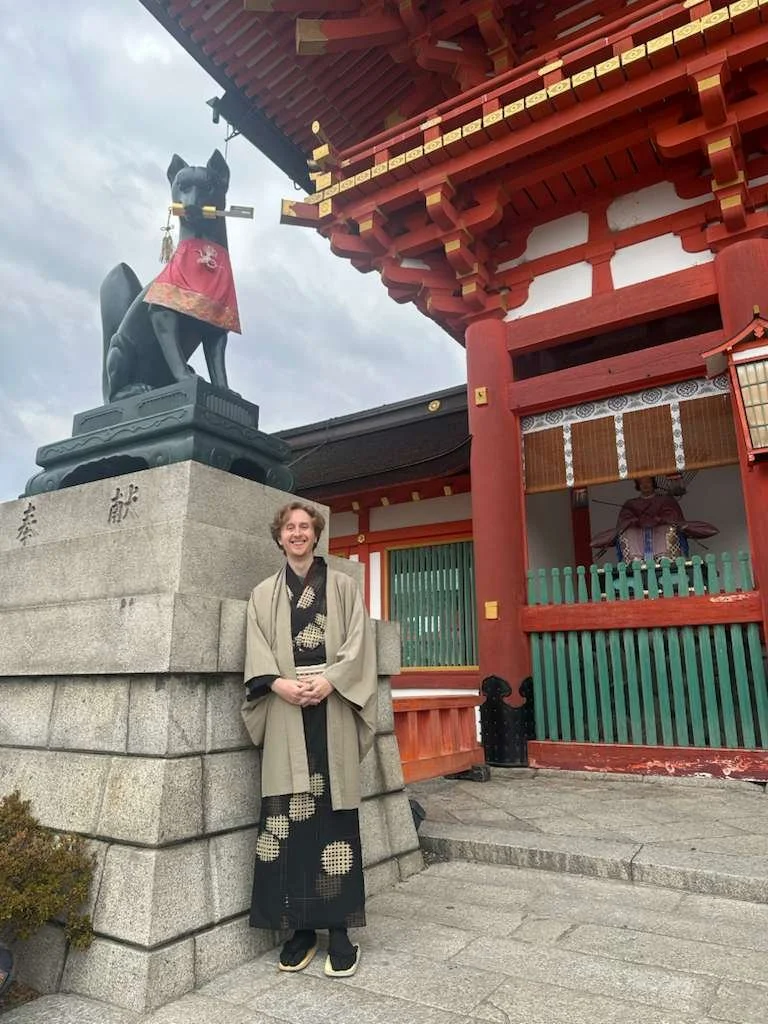
Keep pursuing excellence, Pony Boy!
Empathy Through Education
Issa
“Oh thin little frog,
Don’t lose the fight. Issa
is right here to help.”
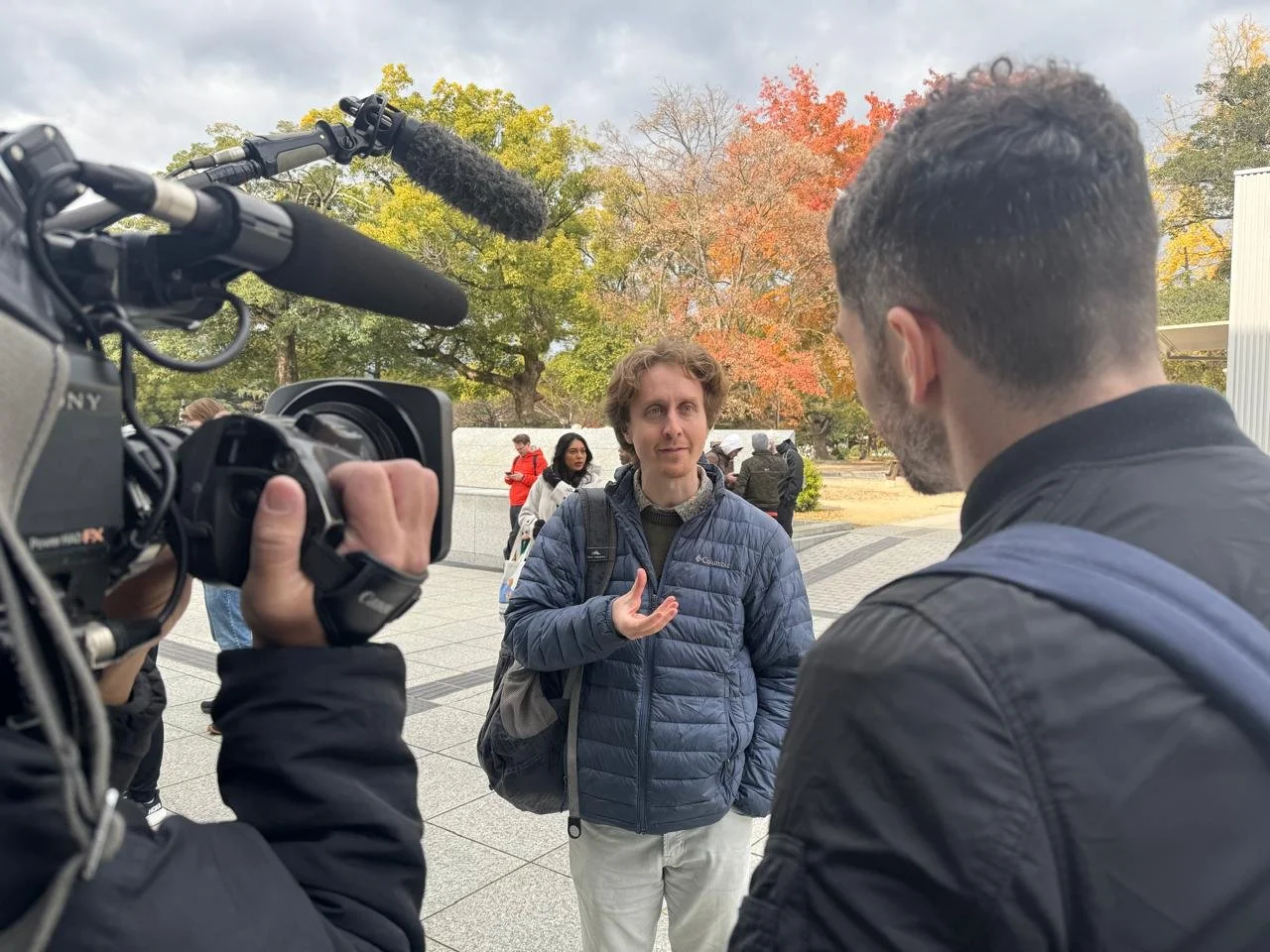
I was interviewed about the Hiroshima Peace Memorial Museum.
There is a lot to be worried about right now. Rising political extremism threatens the stability of systems that, for all their flaws, have created unprecedented global prosperity. Our attention is fractured by devices engineered to reward outrage. We are past climate change prevention and well into adaptation, bracing for displacement and instability.
It would be easy to give in to cynicism. I don’t think that helps.
I believe—deeply—that education is the only durable response we have. Education builds empathy. It teaches people how to think, not what to think. It gives them language, context, and perspective when the world feels loud and confusing.
That belief is why I sponsor educational competitions like the Community College Clash and the International Mock Trial League. It’s why I keep teaching. It’s why I still put myself in rooms where I know I’ll be challenged.
I once approached a debate round with what I thought was a confident, West Coast-style cross-examination. I lost the ballot because the southern judge expected something more measured, polite, and deferential. That was education.
I once had to resolve a Dungeons and Dragons dispute. Two players had legimitate, long-standing gripes about each other’s play-styles. Resolving it took more organizational leadership techniques than I ever needed to deploy in my regular work.
Do I think the American public school system is perfect? Of course not. But I believe deeply in the idea of public education. I believe in classrooms where students from radically different backgrounds can compete on equal footing. I’ve seen students from underfunded schools out-argue, out-think, and outwork peers from elite institutions and then shake hands afterward.
What worries me most today is how quickly we’re losing patience for learning. Attention spans are shrinking. Historical memory feels dangerously thin. We react before we reflect.
I’m Jewish, and we’re sometimes called the “people of the book.” For me, that’s not only about scripture. It’s about study and humility and learning. ’Ive gone back to school again and again—two master’s degrees, a doctorate, and counting—because education sharpens empathy and forces perspective. Perspective-sharing and perspective-taking is what keeps us human and humane.
Issa
“At every doorway,
From the mud on wooden clogs,
Spring begins anew.”
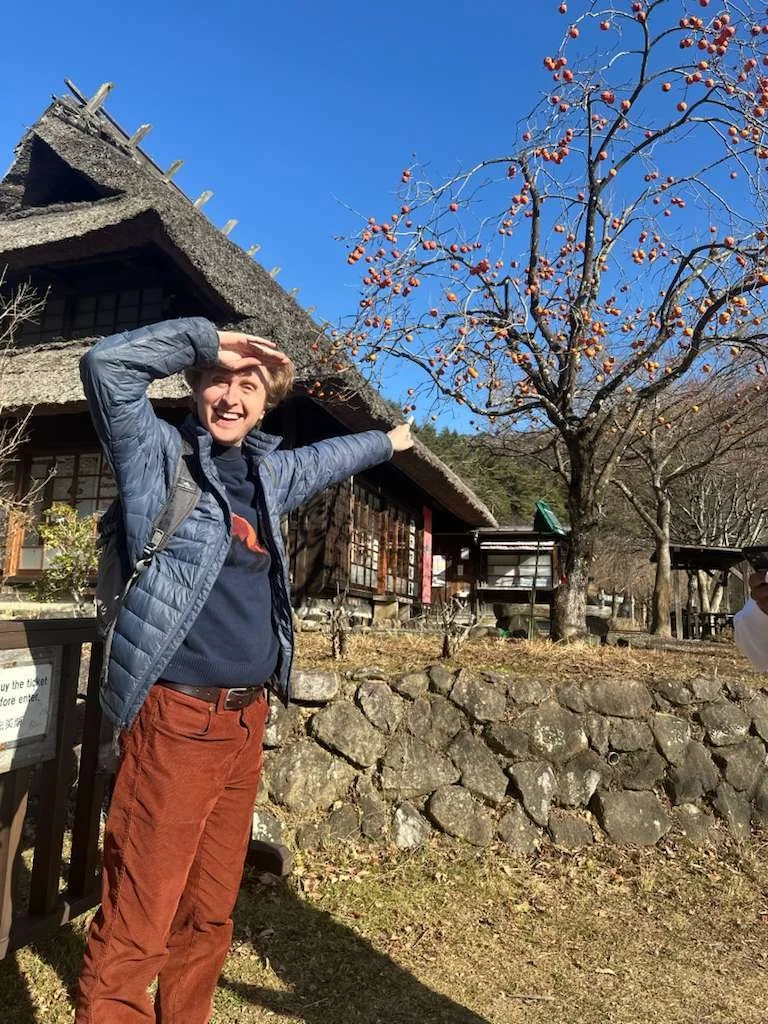
I love that persimmon tree.
Conclusion
I don’t share these stories because I think my values are exceptional. I share them because they are tested against experience rather than inherited by default.
The way you speak reveals what you value. The way you argue reveals what you protect. The stories you tell reveal what you believe is worth preserving.
What are your values? Where did they come from? What stories would you tell if you had to explain them to someone else?