How Do You Get Good Grades in Grad School?


I just graduated from Northwestern’s Executive MBA program. It was genuinely the experience of a lifetime. From starting a D&D club in week two, to serving as cohort ambassador for executives with lifetimes of experience, to closing the program with a barbershop-quartet rendition of the Northwestern alma mater, it was like a sizzle reel of everything I love about academia.
I’m grateful to the staff, to Team B, my study group, and to the professors who pushed hard while still treating us like professionals.
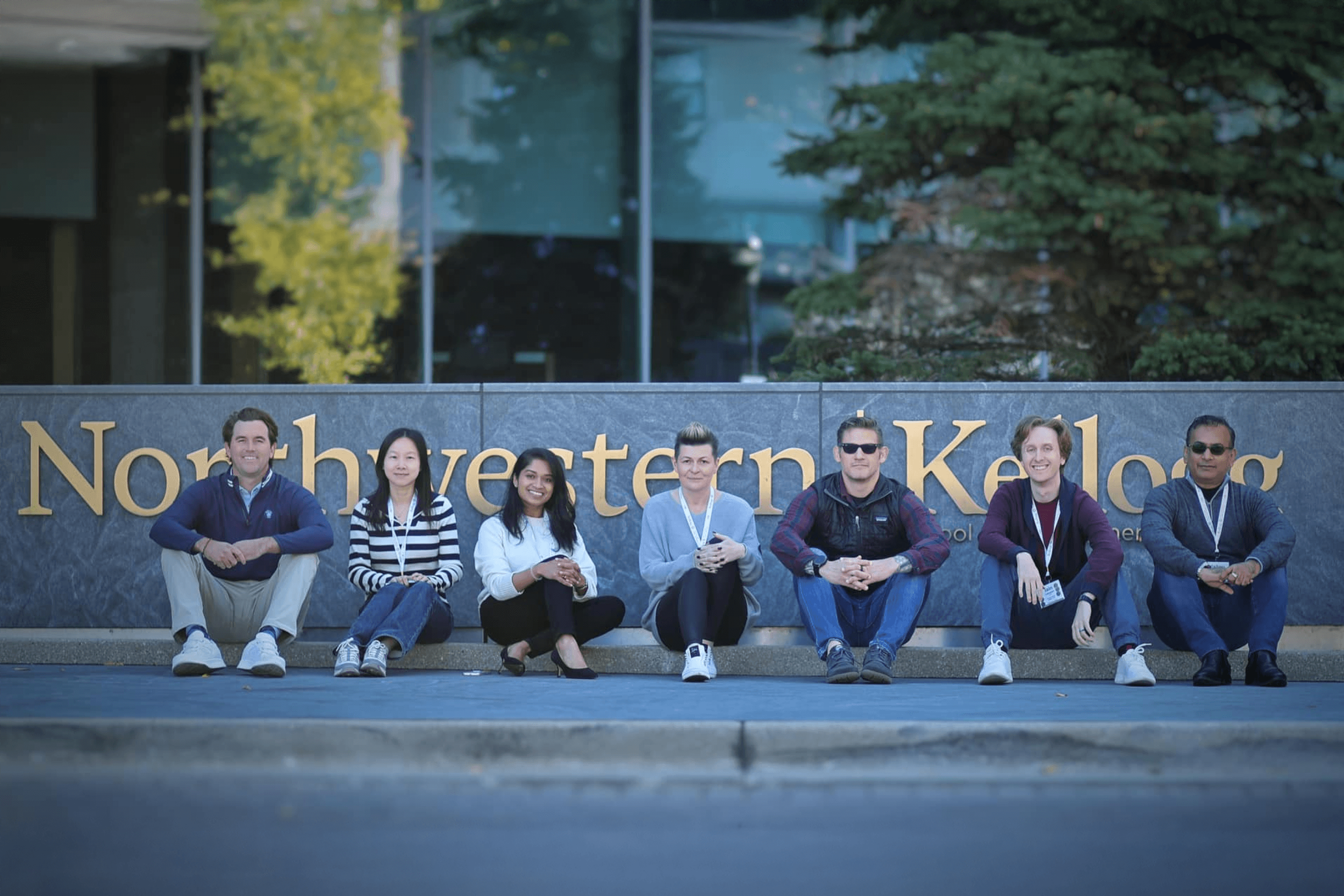
The squad!
This EMBA sharpened my understanding of my own value proposition and my firms’. It expanded my network into a truly global group of people I trust and admire.
And yet, as my good friend Max joked, it also feels like my 24th degree. I’ve been in higher education since 2016, including postgraduate degrees and certifications from places like Harvard, UCLA, George Washington, Vanderbilt, and (go Wolfie!) Madison Area Technical College.
Along the way, I’ve also spent time on the other side of the classroom. I’ve served as a professor in Edgewood’s School of Business and as a graduate assistant in Northwestern’s international program. I’ve been a student, an instructor, and something adjacent to both.
This means I’ve written, read, and graded an enormous number of papers and projects.
Lately, as former students, clients, and even the children of clients enter undergraduate and graduate programs, I keep coming back to the same questions.
What actually makes an assignment good? What are graders really looking for? And how can students approach higher-education work in a way that feels strategic and worth the effort?
I don’t have all the answers, but I have some steps to share.
Step 1 - Study the Syllabus
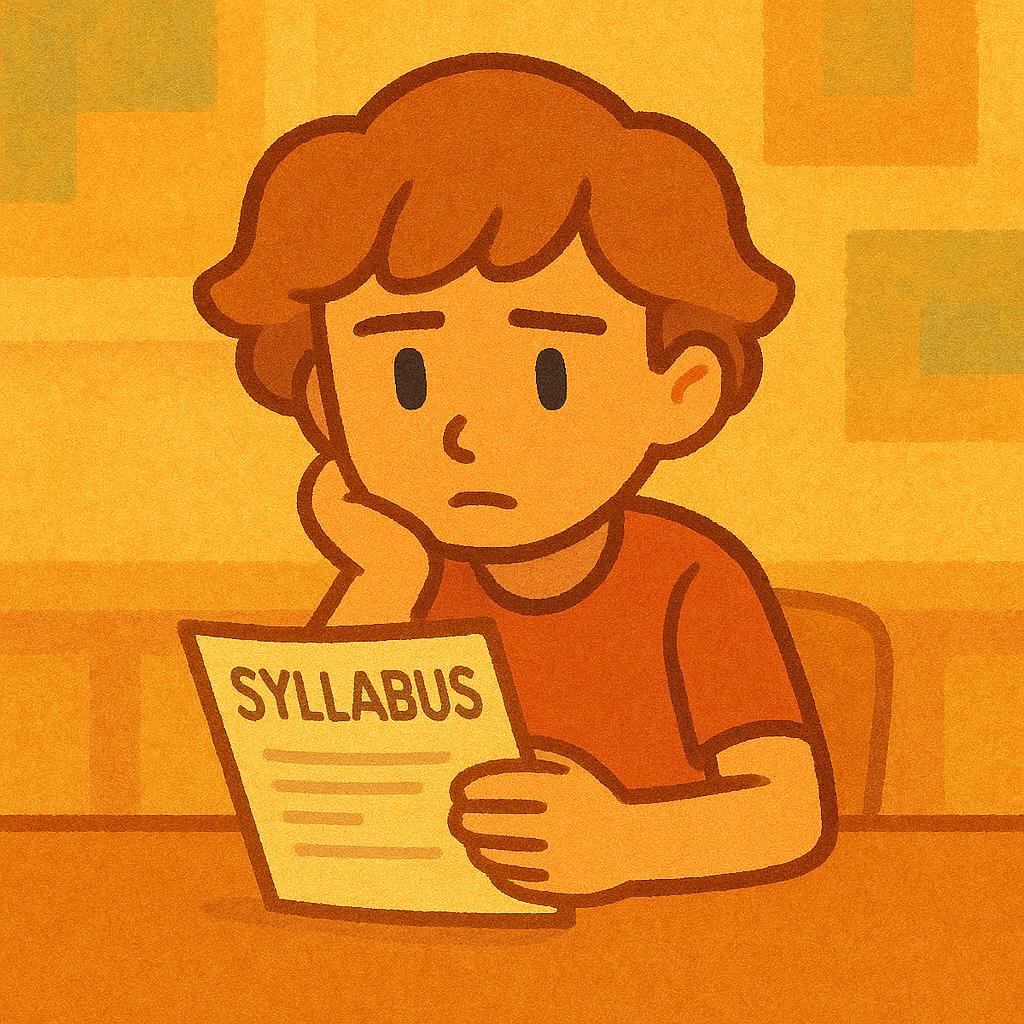
Dude, it’s backwards!
This seems obvious. It is not optional.
Professors and graduate instructors tend to treat the syllabus the way appellate attorneys treat the Constitution. It is the governing document. You do not want to be on the wrong side of a grade because the syllabus explicitly said to cite your use of LLMs and you did not. The syllabus also lets you start tracking major due dates early, which is an underrated advantage in any term that moves quickly.
If you notice small inconsistencies in the syllabus, pause before assuming it is an error. Double-check that you are not missing context or a later clarification. If something still feels unclear, reach out to the professor early. Do it with deference and with the assumption that you may be the one missing something. It is to your benefit to form a positive first impression as soon as you can, especially as someone who is respectful of structure.
You will also often see optional or supplemental readings listed in the syllabus. Do at least one. Then, if it naturally fits, reference it in class. Not in a “look at me” way, but in a way that genuinely adds value to the discussion. Professors notice who is engaging beyond the minimum. This helps you calibrate what the instructor actually finds interesting, which will pay off later when assignments get more open-ended.
Step 2 - Test the Waters

Yup, still wet.
Early on, figure out who is actually grading your work. Is it the professor, or is it a TA or graduate assistant? If it is a TA, are they physically in the classroom? If not, any reference you make to lecture material needs to be far more explicit, especially if that material is not also reflected in the readings or posted slides. Do not assume a grader will infer what you mean.
If the syllabus allows it, email the TA for clarification or guidance early in the term. This leverages a well-documented psychological phenomenon known as the Ben Franklin effect. People tend to feel more positively toward those they have helped. (This isn’t true of every request automatically, so make sure the ask is legitimate and respectful.)
You should also test the waters with your effort level, particularly in classes with heavy assignment loads. For instance, let’s say that you start by submitting work at a strong A-minus or B-plus level. If that earns an A-minus or B-plus, you now know what it takes to push into clear A territory. If it earns lower, you are likely in a tough, highly critical class. If it earns full credit with minimal feedback, that often means the class will not reward marginal improvements in written work, either because the instructor is overwhelmed or because they have not been meaningfully trained in giving detailed, constructive feedback. In those cases, the real value of the class will come from discussions and relationships.
In class, aim to be a presence without dominating the space. My general rule is one meaningful contribution about every forty-five minutes. Something that adds value through a new example, framing, or question. I will step in more often if no one else is talking, but restraint matters.
(And when you talk, PLEASE make sure that you’re speaking to the back of the room, not just the professor in front of you. Project! Nobody wants to keep saying “speak up” instead of internalizing your point.)
Many lectures rely on someone offering an incomplete or slightly wrong answer early on to get the discussion moving. Half-formed but well-intentioned contributions are often the grease that makes the class work.
Step 3 - Keep it Human

Ironically, I generated this with AI.
Yes, everyone can use chatbots now to refine their work. And no, in some cases, that is not categorically different from using tools like Grammarly or Hemingway. But in other cases, it is painfully obvious when someone has copied and pasted the first usable output from GPT and moved on.
Spend five minutes on a subreddit for professors. They hate this. Many genuinely believe it is hollowing out education. I am also highly attuned to the most common AI tells at this point.
Em dashes everywhere. Overuse of “e.g.” Endless triplets. Heavy-handed antithesis. Writing that sounds polished but strangely airless. I have reached the point where I find it actively grating. Recently, I listened to a string of competition speeches that were clearly AI-written, and I found myself both disheartened and bored. I tuned them out almost immediately.
When you are reading AI paper after AI paper, the sameness becomes glaring. That sameness is exactly why many programs are returning to bluebooks, oral exams, and live defenses.
So mark your work with signs of humanity. Use humor. Use self-deprecation. Let your voice come through. If that feels risky in the main body of an assignment, put it in footnotes. Break up the monotony. I would rather see an exhibit that is clearly a photo of a messy, marked-up whiteboard than a perfectly produced, soulless demo video.
Context matters, of course, and this depends on the class/discipline, but you will go a LOT farther in any class if you can connect the subject matter to something that you care about outside of the course.
The goal is to remind the reader that there is a thinking, imperfect human on the other side of the page.
Step 4 - Go the Extra Mile

Go, speed racer!
At a certain point, the top of the class all arrive at very similar answers. So how do you differentiate?
Professors respond positively to work that shows attunement to their intellectual style. The best slide decks tend to be the ones that mirror their designs. I always study how professors format their slides and adjust my presentations accordingly.
I also tend to include clear, easy-to-read exhibits. If I reference a framework from another class, I show it visually. If I reference a real-world event like a speech competition, I include a photo.
And I keep it light! When it became obvious we had fifteen minutes to fill in a negotiations class, a friend and I sang a short duet to illustrate a negotiation over “stage time.” It was playful, but it reinforced the lesson. The goal is to have fun in a way that advances the learning.
I also go out of my way to be helpful to the professor. That includes giving sincere feedback that does not trigger defensive alarm bells. For example: if I could change one thing, I might swap the order of two assignments. Or I might prefer deeper feedback on one paper and lighter feedback on another. Or faster feedback with slightly less depth. Whatever the suggestion, I acknowledge the trade-offs. I name the institutional constraints. I show that I understand there is no perfect solution.
When you do this consistently, you become a collaborator in the class. That is a position very few people occupy, even at the top of the grade distribution.
Closing Thoughts
The students who benefit most over time are the ones who treat classes as ecosystems They pay attention to how faculty think. They notice what sparks genuine curiosity. They build reputations as thoughtful, prepared, and easy to work with.
If you do this well, faculty start to trust you. They give you more latitude. Feedback becomes more candid. Opportunities show up that were never listed in the syllabus. Research invites. Strong recommendations. Informal mentorship. Grades function as lagging indicators of whether you figured out your class’s system.
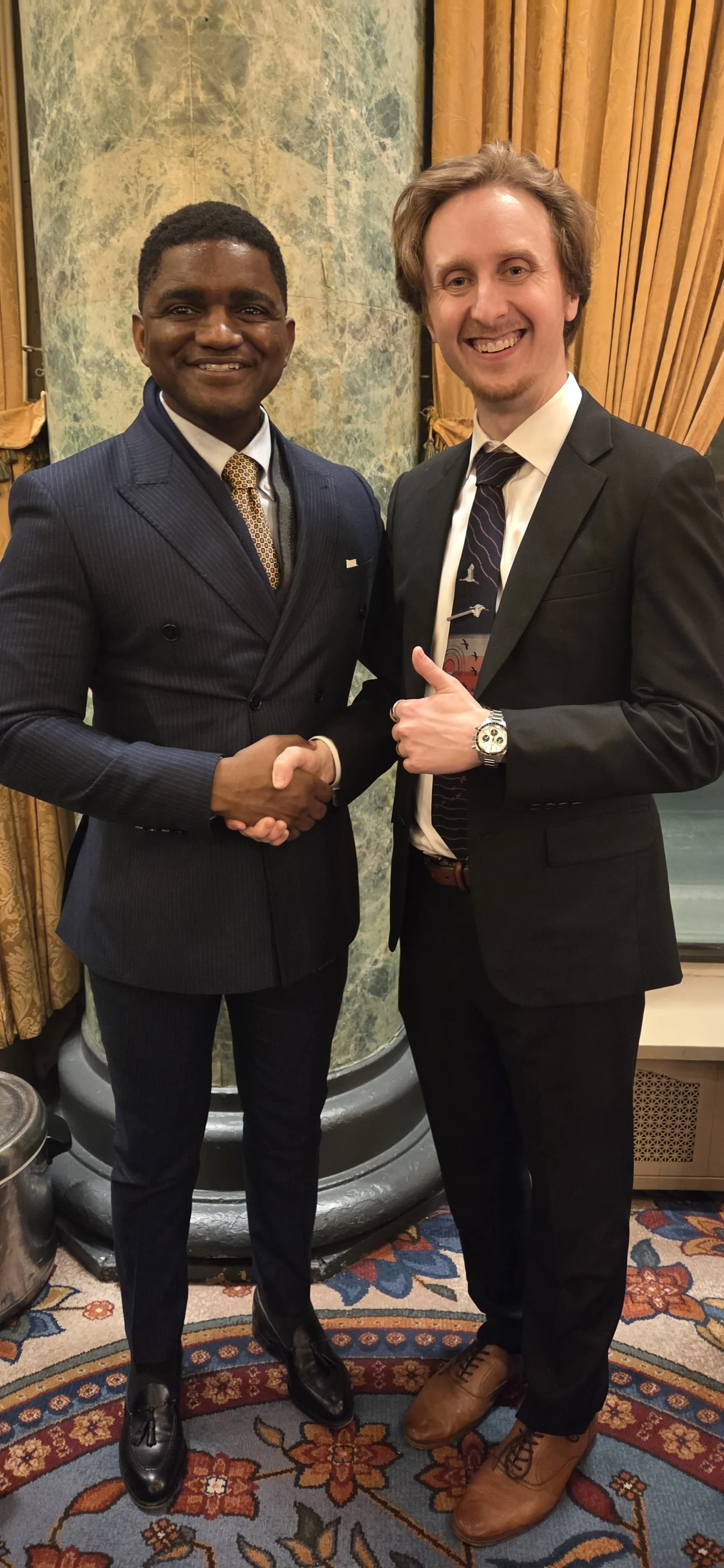
One of my favorite people in the whole class!
Approach school less like a hoop to jump through and more like a set of relationships to steward.
If this way of thinking about school, work, and communication is useful, I write about it regularly.
I share practical guidance on doing high-stakes thinking and speaking. That includes how to write clearly under pressure, how to stand out without performing, and how to charismatically communicate like a real person.