How to Speak About Food
This is the ninth in Authentalk’s series about how to write subject matter-specific speeches. Call it “Nutritiain” or “Micheliain.”
I wasn’t very interested in fancy meals until I went to a theater camp in San Diego.
Between junior and senior year, I had the privilege of attending the La Jolla Playhouse. Every day, I studied theater alongside future stars of stage, screen, and TikTok. Every night, I watched Iron Chef America.
I think the first episode I saw was Cat Cora v. Kerry Simon (Battle Hamburger). Regardless, I was hooked. I had never thought about food and theater in the same sentence. (Imagine if I was studying dinner theater!)
Since then, I’ve made fine dining a core part of my personality. After my students made national final rounds, we celebrated with tasting menus. After Jessica and I moved to Madison, I made a post about my top 10 favorite local restaurants. Whenever we travel, I plan our days around when and where we’ll eat.
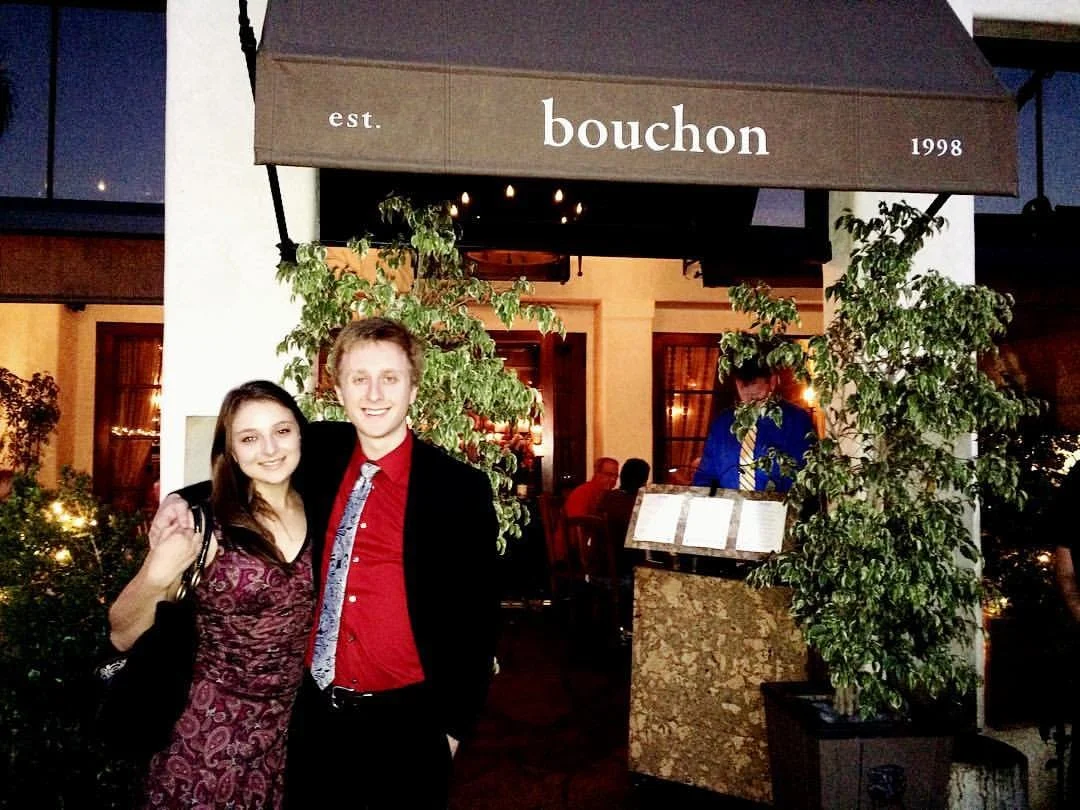
One of our first nice meals (11 years ago)!
Food is serious business. Food writing taught me that people remember atmosphere, judgment, and care.
What can a speaker, executive, teacher, founder, or coach steal from this? Specificity. You have to help a reader or listener imagine the taste of something they’ve never tried.
I wanted to share some of my favorite food-related communication, from food reviews to fiction to videos on my feed.
Literature
James Joyce, Ulysses:
“Thither the extremely large wains bring foison of the fields, flaskets of cauliflowers, floats of spinach, pineapple chunks, Rangoon beans, strikes of tomatoes, drums of figs, drills of Swedes, spherical potatoes and tallies of iridescent kale, York and Savoy, and trays of onions, pearls of the earth, and punnets of mushrooms and custard marrows and fat vetches and bere and rape and red green yellow brown russet sweet big bitter ripe pomellated apples and chips of strawberries and sieves of gooseberries, pulpy and pelurious, and strawberries fit for princes and raspberries from their canes."
You just need lesser-known nouns (floats and flaskets) and some well-placed adjectives (iridescent) to bring this description to life.
Brian Jacques, Redwall, The Bellmaker:
“It was a joyous meal for honest creatures. Dishes were passed to be shared, both sweet and savory. October ale and strawberry cordial, tarts, pies, flans, and puddings, served out and replaced by fresh delights from Redwall’s kitchens. Turnovers, trifles, breads, fondants, salads, pasties, and cheeses alternated with beakers of greensap milk, mint tea, rosehip cup and elderberry wine.”
How delightful. How quaint. How rustic. How filling. (This is from the medieval Zootopia.)
Ernest Hemingway, A Farewell to Arms:
“I sat back in the corner with a heavy mug of dark beer and an opened glazed-paper package of pretzels and ate the pretzels for the salty flavor and the good way they made the beer taste and read about disaster.”
We love alliteration (Paper package of pretzels) and we don’t need punctuation. Good food puts us in the right mood.
Ernest Hemingway (again), A Moveable Feast:
“As I ate the oysters with their strong taste of the sea and their faint metallic taste that the cold white wine washed away, leaving only the sea taste and the succulent texture, and as I drank their cold liquid from each shell and washed it down with the crisp taste of the wine, I lost the empty feeling and began to be happy and to make plans.”
I don’t really drink alcohol, which sucks, because it’s so filling to write about. Last year, I went to Yantai, the Napa Valley of China, which led to a speechwriting project about its bountiful grape harvest. It’s fulfilling to put words on a page about something you know you shouldn’t have.
George R.R. Martin, A Dance with Dragons:
“The beer was brown, the bread black, the stew a creamy white. She served it in a trencher hollowed out of a stale loaf. It was thick with leeks, carrots, barley, and turnips white and yellow, along with clams and chunks of cod and crabmeat, swimming in a stock of heavy cream and butter. It was the sort of stew that warmed a man right down to his bones, just the thing for a wet, cold night. Davos spooned it up gratefully.”
If George R.R. Martin cut out the food scenes, he would have finished that damn series a decade ago. I think he might distract himself mid-writing with these succulent passages. This takes me back to when I was homesick on an eighth grade field trip to the mountains, and the chaperones made me piping hot spaghetti. That was the first time I thought of food as an expression of care.
Jonathan Gold, Flesh and Bone:
“A whole fillet of Japanese beef, as wrapped in ninja-black cloth and carried around by the beef sommelier at Wolfgang Puck’s steak house Cut, is as ghostly white as an alabaster slab, like steak as seen in a photographic negative, like something Francis Bacon might have carved out of soft stone. Cooked, a single mouthful of Japanese rib eye from Kyushu pumps out flavor after flavor after flavor, every possible sensation of smoke and char and tang and animal you can imagine until your teeth have extracted all the juices. If you happen to be at Cut, and you happen to have in front of you what would ordinarily be a perfectly splendid corn-fed Nebraska strip steak, aged 35 days, seared at 1,200 degrees, then finished over oak to a ruddy, juicy medium rare — or even an example of American wagyu rib eye — you would take one bite of your neighbor’s Japanese Kobe steak, cooked the same way, and look around for rocks to throw at your own hunk of meat.”
RIP. I went on a food tour of Japan a few years ago, and Gold’s writing was the perfect appetizer before I dug in to a “meat sashimi” experience. His mouthwatering prose transcends.
Food Shows
WORTH IT: Andrew, Steven, and Adam are icons. They compare three types of the same dish and review which one provided the best value at its respective price point. This is a brilliant concept for any review channel, which is why they expanded it to things like tailors, flights, and massages. But their rapport (Andrew’s serious, Steven’s goofy, Adam only chimes in a couple times per episode) elevates the experience. It makes you want to try new good food with old good friends.
ANDREW, STEVEN, AND ADAM: When Buzzfeed started hemorrhaging viewers, the same toothsome trio made their own channel. Same general format, but a deeper focus on letting the restaurant owners tell their stories.
LAST MEALS: This channel makes a very morbid subject (death) feel nutritious, even mouthwatering. Food is an expression of culture—our collective beliefs about the world—and seeing what people would value on their deathbed helps me reflect on the ideas behind what I put into my body,
GOOD MYTHICAL MORNING: I’ve loved these two since high school. Lifelong best friends compare down-to-earth American fast food and fast casual chains head-to-head. Spoiler alert - Costco always wins, as well it should.
RUNNING ON EMPTY FOOD REVIEWS: This dapper young man is like me if I had ten times the discipline, one hundred times the ability to laugh at myself, and a thousand times the old-timey charisma. He gives candid, gentlemanly opinions on new fast food items without ever losing his idiosyncratic, Gatsby-esque authenticity.
ALEXANDER THE GUEST: Here’s the man I look to for expensive recommendations. A Michelin-starred chef reviews the most vaunted restaurants on earth. Alexander tells it like it is without ever disrespecting the artistry and effort behind these establishments.
I challenge you to do three things.
Make your own list of favorite food-related quotes. Reflect on what they mean to you. Explain them out loud to a friend.
Do your own food review of a restaurant you frequent.
The next time a loved one (spouse, parent, child) cooks for you, write down a short card, telling them exactly what the meal meant to you, and being specific about what you appreciated most about the meal.
I would be remiss not to cite the late, great Anthony Bourdain.
“Your body is not a temple, it’s an amusement park. Enjoy the ride.”