The Gauntlet and Genevieve
The Gauntlet is the best mock trial tournament. It’s not particularly close.
The Contest’s History
Coaches from UCLA and Chicago founded it in 2024. I was not one of them, though they did name a witness in the first case after me. The contest centers on witness performance. Each witness is a “runner” who must portray sympathetic or emotional witnesses, humorous character witnesses, expert witnesses, and party representatives, meaning plaintiffs or defendants.
The first case was about a carnival stunt gone wrong. The second was about a vigilante trying to expose a shady nightclub owner. This year’s case was about whether a billionaire had been unfaithful to their spouse and violated their prenuptial agreement, or whether the relationship had always been nothing more than a contract marriage.
Many public speakers, particularly mock trial attorneys, worry about doing something wrong. Am I being too aggressive? Will this alienate my audience? The Gauntlet removes that fear because the attorneys are not scored. As a witness, or runner, you can bring two attorney teammates. One directs you, allowing you to tell your story. The other cross-examines your opponent and tries to throw them off their game.
The University of South Carolina pioneered the “going nuclear” strategy in the tournament’s first year. Their attorneys cut off opposing witnesses, quizzed them about largely irrelevant portions of their witness statements, and tried to catch them in lies. By year two, many teams had followed in their footsteps, notably Emory, Harvard, Texas, and UCLA.
In year three, nearly every team was riffing on USC’s playbook and finding increasingly creative ways to embarrass the opposing witness. Think of it like the World Cup, except everyone is as aggressive as Argentina.
Of course, going nuclear is a high-risk strategy. If you keep throwing fastballs at the other witness and they keep knocking them out of the park, the judges may reward them for holding up under pressure. At its best, it becomes a battle of wills and wits.
There are two final twists to the contest. After the preliminary rounds, the top four competitors are announced. Each of the four selects a side, plaintiff or defense, and two of the four witness types.
There is game theory at play. For instance, suppose you know that another finalist specializes in expert witnesses, and you do as well. You might choose your preferred side rather than selecting the expert category because you trust that the other competitor will choose experts anyway.
The final twist is that each of the top four competitors gets to choose one ally team from among the non-advancing contestants. They gain access to that team’s runner, both attorneys, and coach. You have to consider chemistry: Will you get along? Knowledge: Although they cannot share specifics about the remaining finalists, can they share useful strategies based on the case materials? Performance: Can their attorneys deliver an opening statement, cross-examine, or conduct a direct examination? Practice: Can you trust the new team to run drills with you before each round?
The 2026 Competition
I coached UCLA at all three Gauntlets, with our runners finishing second, third, and seventh. This was the first year we missed the semifinals. It was a little like the “Bad Boy” Pistons, who won NBA titles in 1989 and 1990. By 1991, Michael Jordan and the Bulls had studied their film and adjusted to their style.
I thought this was terrific. In fact, none of the returning top-four runners placed again. The competitive meta keeps evolving, and the field keeps getting stronger.
I haven’t been as locked-in on college mock trial in 2026 as in prior years. I went to a tournament in Chicago, skipped regionals and national qualifiers, and went to the national championship but was too sick to make it to any round except #4. My mind has been elsewhere.
Did I mention Jessica and I are trying to have a child?
Now it’s the 2026 Gauntlet semifinals.
The first seed, Chicago, the defending champion program, chooses Stanford. This makes sense because one of Stanford’s attorneys attends Chicago.
The second seed, Northwestern, a returning semifinalist program, chooses Boston. This also makes sense because one of Boston’s attorneys had just reached the finals of Trial by Combat, the attorney Tournament of Champions.
The third seed, Rhodes, chooses fellow Southern school Emory. Emory is coached by Rika Lakkaraju, a four-time All-American attorney who helped Chicago win the championship the previous year.
The fourth seed is Indiana.
They choose us.
We had interacted very little, but they liked our vibe during the first preliminary round. And we were off to the races.
Semifinals
Our group chat for the contest was called “Gauntlet Gold Gang.” Whether we were the runners or the running mates, we were going to do our damnedest to help them win.
UCLA’s runner practiced delivery and characterization with Indiana, while our attorneys shared their cross-examinations. I pretended to be the opposing witness as we conducted sound checks and prepared controls for possible fights on cross. We joked about musical theater and parenthood.
Did I mention that Jessica is pregnant with our future child?
In the semifinals, UCLA attorney Lydia went toe-to-toe in opening statements with Chicago’s national champion and Trial by Combat winner. UCLA attorney Hannah went tactically nuclear against Chicago’s national champion witness, laying the groundwork for Indiana’s witness to draw audible gasps from the judges as she genuinely cried.
Chicago struck back in the second half with a very compelling financial-fraud expert witness. Was Indiana’s sympathetic portrayal enough to keep her ahead?
Yes.
She upset the first seed and advanced to the finals against Rhodes, the team that had helped 2025 runner-up Texas.
The Final Round
Rhodes’ runner is one of my favorite competitors on the circuit. He chose the defense, allowing Indiana to perform on the plaintiff side, which she preferred. He would first portray the humorous character witness, reminiscent of Bill Hader’s “King of Hollywood” character, and then the billionaire party representative, channeling Kendall Roy from Succession.
Indiana would first portray a ditzy assistant inspired by Karen from Mean Girls, followed by a sincere and heartbroken spouse.
Rhodes and Emory pulled out all the stops: aggressive objections, strong cross-examinations, and compelling stories.
The Rhodes runner was prepared for nearly all of UCLA’s first cross-examination, drawing even bigger laughs on cross than he had on direct.
In the second half, Indiana rallied, neutralizing some of Rhodes’ emotional appeal and highlighting the plaintiff’s heartbreak and humanity.
I was outside the room, watching the livestream and calling Jessica.
Ever since fatherhood became a possibility, I have been thinking about good influences. Some forms of media seem better than others, and Bluey is pretty great, but there is nothing like having real role models.
I am close to the UCLA students, so I know how hard they work and how strongly they support one another. But this experience with Indiana confirmed that you should not be tribal about these things. When you open your heart and mind and try to help others, you find remarkable role models for young people everywhere.
As the round ended, it felt to me as though Rhodes had won the character-witness half and Indiana had won the party-representative half. It also seemed that Rhodes’ portrayals had been marginally more versatile, which served as a tiebreaker.
In my eyes, the question was whether Indiana had won the party-representative half by a larger margin.
After eight of the nine ballots were submitted, the score was tied 4–4. The final ballot gave the round to Indiana by a single point.
Like Biden in 2008, after dropping out of the presidential primary, the UCLA squad had helped these Midwesterners, Hoosiers rather than Chicagoans, earn a national championship.
Gauntlet Gold Gang, indeed.
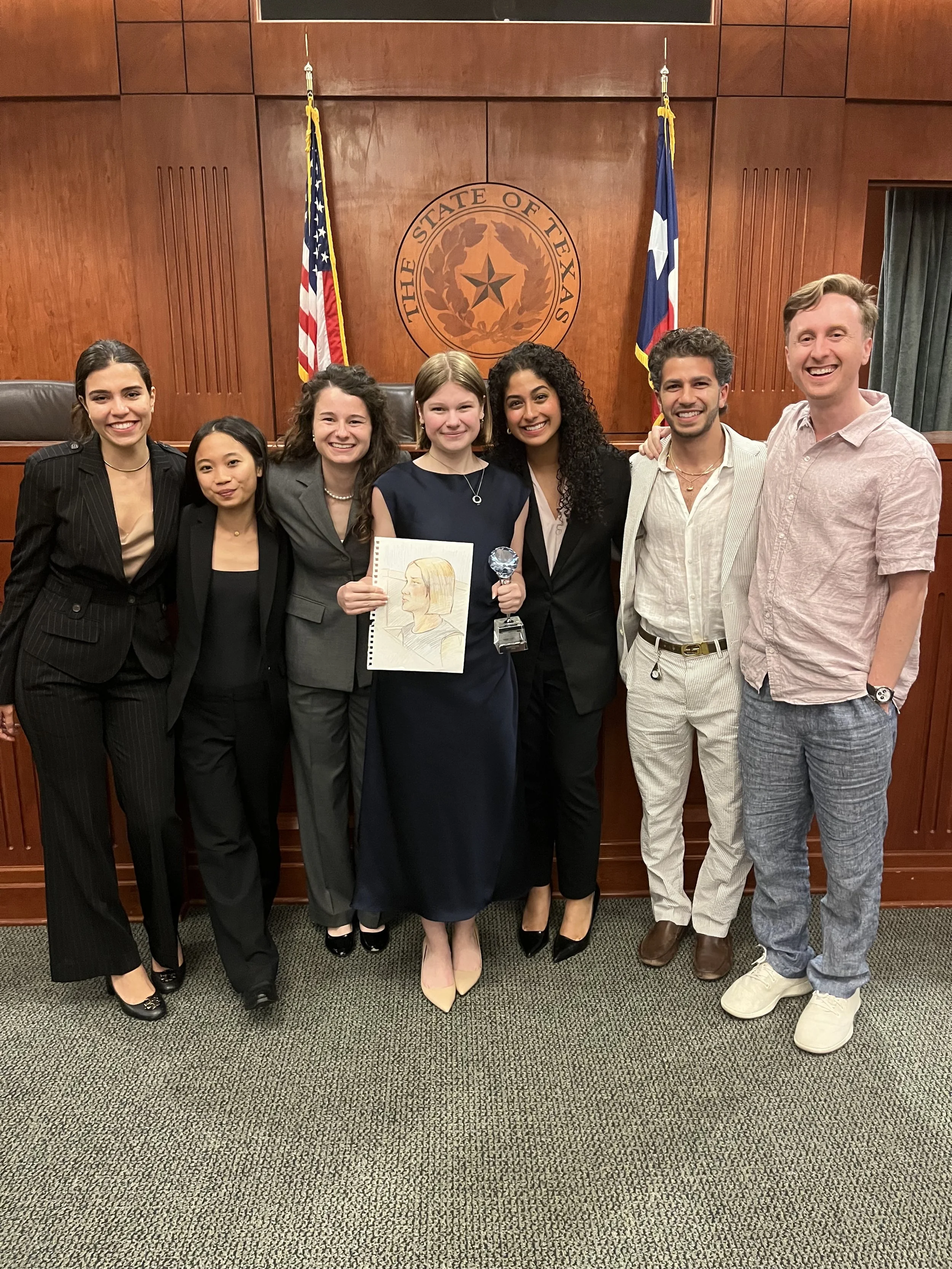
The true Gauntlet Gold Gang!
My Reflection
I love the Gauntlet for what it brings out in people. Attorneys fight harder here than anywhere else, but afterward, they turn around, shake hands, partner up, and celebrate together.
Witnesses push themselves to their limits, memorizing eight different witness statements and developing nuanced portrayals for every one of them. Coaches sit back and celebrate these undergraduates for accomplishing things that I would wager most theater students could not pull off.
At this tournament, the Indiana-UCLA pre-round chant became “Inshallah.” Colloquially, it means “if it is God’s will.” “Mashallah” recognizes and celebrates what God has already willed.
Inshallah, we award.
Inshallah, we reach the finals.
Inshallah, we win.
Throughout the tournament, I was anxiously waiting for a text from our healthcare provider with reassuring information about the fetus’s health and sex.
No text came on Friday, Saturday, or Sunday. I realized we would probably receive it on Monday morning.
Recently, Jessica and I decided that we would name a boy Rowan Alexander. Rowan is a Celtic name, reflecting the heritage of my Welsh grandmother. Alexander, pun intended, is a great name. As someone with a first name that is difficult to spell and pronounce, I liked that if he ever had trouble with Rowan, he could go by his middle name.
But for years, literally a decade, we had known that we would name a girl Genevieve. It is a more accessible version of Guinevere, and as someone of partial Celtic descent, I love Arthurian legends. It is also easy to shorten: Genny, Neve, Vivi, and more.
More recently, we considered the middle name Rose. I have two grandmothers named Roslyn and Rosalinda. Both of our mothers tend to flowers. Jessica’s mother owns a flower shop in North Hollywood, while my mother entered her prize roses in contests at Descanso Gardens.
It seemed fitting. Rowan Alexander. Genevieve Rose. Inshallah, we will have a healthy child.
Did I mention the UCLA runner’s name? Alexi.
Did I mention the Indiana runner’s name? Genna. It’s short for Genevieve.
On Monday morning, we received the text: next year, we are going to have a baby girl.
One day before we confirmed that Genevieve Rose Lampert would come into the world, Genevieve Horvath became the top witness at the Gauntlet with the help of Alexi Melki. Mashallah.
And Inshallah, this tournament will continue.
Inshallah, our students will keep growing and inspiring one another to grow.
And Inshallah, Genevieve Rose will become as strong, clever, and kind as these runners.
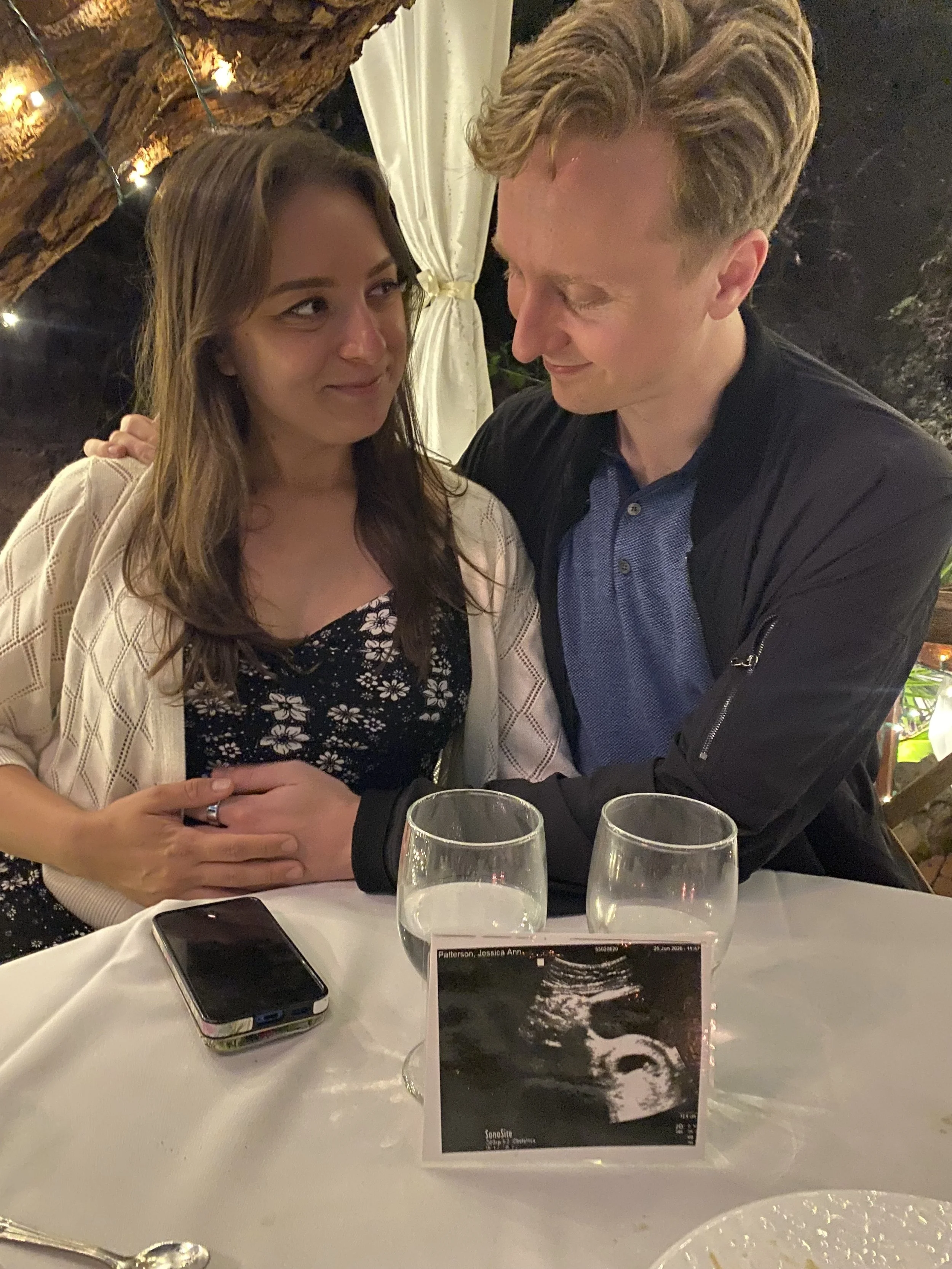
Your future Gauntlet winner.